Showing posts with label commercial lending. Show all posts

Friday, April 18, 2014

SME Lending: Get Redi to Get Funded

The tough conditions in the credit markets require small businesses to communicate and demonstrate their credit worthiness to satisfy exacting credit risk standards of lenders. Credit channels are open and loans are being made but strict federal regulations and heightened risk aversion by lenders places additional burdens on borrowers to demonstrate they are a good credit risk.

“You have to be prepared,” said Robert Seiwert, a senior vice president with the American Bankers Association. “If you have a viable business model and the banker feels that this business model is going to work in this new economy, you have a very good chance of getting financing. But you have to be ready to show that it will work.”

"Small and medium-sized businesses are the lifeblood of the U.S. economy.  Their ability to prosper and grow is key to job creation to help our nation recover from the economic slowdown. But with the number of bad loans mushrooming in recent years because of the economic downturn, federal regulators have put in more stringent guidelines for qualifying for financing.", stated Ken Lewis former CEO of Bank of America.

Communication with Lenders is Key
Maintaining an open line of communication with your credit providers is key.  During times of prosperity the lines of communication are open; but during times when businesses face adversity the phone stops ringing and lenders start to get nervous.  When business conditions get difficult businesses need to communicate with greater frequency and openness with their lenders.  Bankers don't like surprises.

Reason to Communicate: Risk Assessment
The entrepreneurial nature of small business owners make them natural risk takers.  They have an unshakable belief in the fail safe nature of their ideas and have strong ego identification with their business.  This often makes them blind to the risks lingering within the business enterprise.  Their innate optimism may also cloud an ability to objectively analyze business risks and prevent them from seizing opportunities as a result of poor assessment capabilities.

Conducting a disciplined business assessment will uncover the risks and opportunities present in the enterprise and in the markets that the business serves.  This risk assessment is a great opportunity to communicate to lenders and credit providers that business management are capable risk managers and are a worthy credit risk.  Lenders will be impressed by the transparency of your risk governance practice and will be more disposed to provide financing for projects and opportunities that will propel future growth.

Banks are looking for businesses that are prepared with their financial and business plans. Business owners must present a clear purpose for the loan tied to clearly defined business objectives.   The risk assessment exercise is a vital tool that assists in the construction of a business plan that builds  lender's confidence in your business.  The assessment will reveal the largest risk factors confronting your business and outline clearly defined opportunities that promises optimal returns on loan capital.

Its music to a bankers ears that clients are managing risk well and have identified the most promising opportunities  for business investments.  It is usually a recipe for success and that will allow you and your banker to develop a trusted business relationship based on honesty and transparency.

Get Credit|Redi
Sum2 offers a portfolio of risk assessment applications and consultative services to businesses, governments and non-profit organizations. Our leading product Credit Redi offers SMEs tools to manage financial health and improve corporate credit rating to manage enterprise risk and attract capital to fund initiatives to achieve business goals. Credit Redi helps SMEs improve credit standing to demonstrate creditworthiness to bankers and investors. On Google Play: Get Credit|Redi


Risk, SME, commercial lending, alternative credit channels, credit risk, community banking, small business lending, business plan, capital raise, risk assessment

Monday, April 14, 2014

SMEs Dance to the Basel III Shuffle

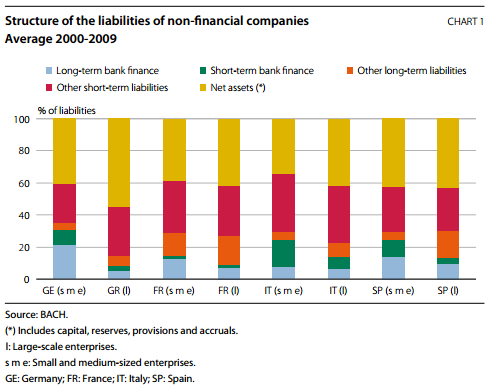
cap structure sme eu.PNG
I often wonder, what if Basel II capital accords had been in place prior to the Great Recession? 

Could the devastating crisis fueled by the serial pops of credit bubbles rumbling through the dismal landscape of G20 principalities been avoided with better capital adequacy safeguards? 

Could the precious Post Cold War peace dividend been preserved; had the fiduciaries of global solvency not toppled the dominoes of economic prosperity and political stability through extreme selfishness and irrational behavior?


Some economists assert that had the guidelines of Basel II been in place it would not have mattered. That may certainly be true, but one is still left to wonder if Systemically Important Financial Institutions (SIFI) had followed better governance frameworks the fissures emanating from the epicenter of the global economic meltdown would not have been as deep or as widespread.

The lessons learned from the crisis are being codified in the new governance frameworks of Basel III. Whereas previous Basel Accords focused on capital adequacy and loss reserves aligned to risk weighted assets and counterparty exposures, Basel III looks to strengthen capital adequacy by addressing liquidity and leverage risk in the banks capital structure. Basel III recognizes the primacy of mitigating the systemic risk concentrated in the capital structure of a SIFI and lesser designees, and the contagion threat it poses on its counterparties and the greater economy. 

To ally solvency concerns, Basel III installs a leverage ratio and bolsters its Liquidity Coverage Ratio (LCR) which will require all banking institutions to increase its regulatory capital reserves of High Quality Liquid Assets (HQLA). An increase in HQLA reserves will raise the cost of capital for all financial institutions requiring it to raise its spreads on credit products. 

SMEs will be particularly affected by Basel III initiatives. SME’s are highly dependant on bank capital and credit products and remain highly sensitive to the cyclicality of macroeconomic factors. D&B’s Small Business Health Index reports that SME business failures in the US were in excess of 140,000 per month in 2013. The OECD reported that during 2012 over 800,000 EC SME’s closed shop in 2012. 

Eurofact reported that 60% of all non-financial value add to the EC economy is attributable to SMEs. Though SMEs are generally recognized as principal economic drivers in both the developed and lesser developed economies; during the economic crisis SME’s were rationed out of the credit markets. Large capital infusions and accommodative monetary policy by the central bank authorities principally sought to bolster bank capital and inject liquidity into the faltering global banking system. 

As such much of the low cost capital provided to banks did not trickle down to SMEs. Better returns were realized by deploying capital to investment partnerships, energy resource development, the acquisition of strategic commercial enterprises and underwriting speculative trading in the global security markets. 

Little of the low cost capital found its way onto Main Street; driving the bifurcating wedge between the real and speculative economy. As a more conservative political landscape emerges from the wreckage of the economic calamity created by “elitist” financial institutions and “remote” Brussels based government bureaucrats, the cause of the SME is resonating in the rising voice of a middle class spoken with a distinct nationalist accent. 

Politicians, legislators and advocacy groups are fully invested in the cause of the SME. Stakeholders are advocating more government involvement to underwrite and guarantee sponsored loans. In an era where government involvement in markets is under severe attack, political expediency and prudent economics coalesce to fund the incubation of SMEs. Even if greater government intervention is counterintuitive to laissez faire proclivities of the politically engaged, higher taxes would be required to fund the risk of capital formation initiatives. The securitization of SME loans is also a consideration; but aversion to leverage and the risk to encourage poor lending practices raise fears of creating yet another credit bubble.

The Government of Singapore recently rose its guarantee on SME loans to cover 70% of principal in response to the increase in cost of capital banks will charge as a result of Basel III. Spreads on SME loans are estimated to increase between 50 to 80 basis points. This rise in the cost of capital will allow banks to recoup Basel III compliance expenses associated with the segregation of regulatory capital requirements to service SME loan portfolios.

The risk premia on SME loans is justified by regulators because it guarantees the availability of credit through the business cycle. The financial health of SME’s are highly correlated to the vicissitudes of the business cycle. During times of cyclical downturns risk factors for SMEs are magnified due to the prevalence of concentration risk in products, regions, markets, client and critical macroeconomic factors germane to the SME’s business. Mitigation initiatives are inhibited due to liquidity constraints, resource depletion and balance sheet limitations. The closure of credit channels exacerbates this problem and Basel III risk premia pledges to fund SMEs through a trying business cycle.

To maintain profitability of SME lending, banks will enhance quality standards and haircut collateral margins; a potentially onerous demand since asset valuations remain severely distressed from the effects of the Great Recession. Banks will avoid SMEs with enhanced risk profiles, make greater use of loan covenants, expand fee based services and hike origination fees to protect margins and instill enhanced credit risk controls to minimize default risk.

As the strictures of Basel III take root within commercial banks alternative credit channels are opening to better match an SME’s credit requirements and market situation with a financial product that best addresses their business condition. D&B has initiated a timely capital formation initiative for SMEs. Access to Capital - Money to Main Street is an event tour that is bringing together regional providers of funding for SMEs and startups. 

The economic recovery is combining with technology to energize innovations in SME funding options. Crowd-funding, micro-lending, asset financing, leasing, community bank loans, credit unions and venture capital channels are a few of the many options available for small business funding. Each channel offers distinct terms and advantages that match a funding option to the specific situation of an SME. 

SME associations and advocacy groups are surfacing in the EU that seek to harness the residual capital created by SME failures. Second Chance and Fail2Suceed are initiatives that seek to harness the intellectual capital garnered by entrepreneurs in unsuccessful enterprises. It is a clear recognition that a great failure can be the mother of greater wisdom. This may augur well for the success of Basel III as it seeks to build on the shortfalls of its forebears to better protect the global banking system as it promotes the wealth of nations by equitably funding the growth of the global SME segment.

Sum2 offers a portfolio of risk assessment applications and consultative services to businesses, governments and non-profit organizations. Our leading product Credit Redi offers SMEs tools to manage financial health and improve corporate credit rating to manage enterprise risk and attract capital to fund initiatives to achieve business goals. Credit Redi helps SMEs improve credit standing to demonstrate creditworthiness to bankers and investors. On Google Play: Get Credit|Redi


Risk: SME, Basel III, commercial lending, political stability, economic growth, USA, EU, alternative credit channels, credit risk, global banking, business failure, OECD, SIFI

This article was originally released on DaftBlogger.  

Tuesday, March 18, 2014

We Can Work It Out: SME Credit Repair

As the US economy slowly emerges from the great recession many small businesses are looking upon battered and bruised balance sheets and income statements.  Before the downturn they looked young healthy and vibrant but the distress of the credit crunch, high unemployment and record business closures has taken its toll. Receivables growing longer in the tooth each month.  Write offs of bad debt up. Client defections, pinched profit margins and market erosion due to decreased buying power, business closures and clients going with competitors offering rock bottom pricing.  

No the balance sheet doesn't look as healthy as it did during the salad days of the past decade but the good news is the business survived a damning business cycle. Time to conduct a credit analysis exercise to get the company financial statements back into shape.

Here are seven quick questions one needs to answer to assess an SME's credit worthiness. 

Management

Do your business leaders have the talent, experience, character, leadership, and knowledge of the business to succeed?  If not, what should be done to close those gaps?

Are the right people in the right jobs? Should people be repositioned to optimize fit and overall performance? Should you make strategic hires to improve your talent mix in critical functions across the firm?

Business
  • What is the overall health and landscape of your industry? 
  • Who are the primary and secondary competitors? How is their health? 
  • What does the SWOT analysis reveal for your industry and competitors? 
Financials
  • How healthy are your balance sheet and income statements? (Compare to previous financials over 1, 3, and 5 year periods.) 
  • What are your pro-forma projections? (1, 3; 5 yrs) 
  • What significant trends do you observe? 
  • What should you be doing based on the trends you have identified? 
Use of funds
  • Why do you need funding? 
  • How will the funds be used - 90 days, 1, 3, 5 yrs? 
  • (The key here is to describe in detail with specific usage, timing, and activities.) 
Sources of Repayment
  • What are your firm’s primary, secondary, and tertiary income streams? 
  • How reliable or likely are those sources going forward? Most importantly, are those revenues diversified and recurring? 
Customers and Suppliers
  • What are the composition and attribution metrics? Most importantly, are there any concentration risks? If so, what can be done to mitigate them? 
  • How healthy are they?
  • What are the demographics driving both groups? 
  • Where are they in their client or product life-cycles? 
  • Where are your suppliers in your products and services value chain? 
Products and Services
  • Ask the same questions listed for Customer and Supplier. 
  • What are the consumer demand, utilization metrics, and trends for your existing offerings? 
  • What new products and services are in your pipeline? How do you envision those new products and services impacting your financials (balance sheet, income statement, and statement of cash flows) and business strategies going forward? 
  • What are your competitors offering? How does that impact your business?
This cursory assessment will get you started.  

Sum2's clients use Credit|Redi to rate company credit worthiness and conduct business analysis to optimize financial performance and create business plans that are sure to win the confidence of lenders and capital providers.

Credit|Redi used by effective SME managers to improve profitability, credit worthiness and grow the confidence of lenders and shareholders.
Get Credit|Redi on Google Play here. Get Credit|Redi 

risk; sme, credit risk, lending, private equity, financial health, risk assessment, credit repair, business planning and analysis


Friday, March 14, 2014

Small Firms Missing Out on Funding Opportunities


The Liverpool Echo reports today that a Lloyds Bank study of North West small firms, many SMEs are qualified for loans but problems with managing large outstanding receivables damages the company credit profile.

Lloyds' recent report on SME market segment uncovered some startling creditworthiness indicators. The report reveals:

... More than half the North West’s small firms (54%) are confident about investing for growth this year – but many are sitting on untapped assets and are owed thousands in unpaid bills…

...the average North West small company has £223,000 of assets, but is owed £56,000 in unpaid invoices…

...The UK as a whole has a total of £770bn of untapped assets in small firms – equal to 48% of the UK’s GDP – while they are owed a total of around £291bn by customers…

Lloyds believes many firms are ignoring alternative funding options to help them expand and grow. Clare Boswell, area director of Lloyds Bank Commercial Finance in the North of England, said: “Our research found that more than half of SMEs (small- to medium-sized enterprises) in the North West are more confident about investing in growth this year than they were 12 months ago.

“Despite this, SMEs are missing out on the opportunity to recruit new staff, break into new markets or develop new products because they are not harnessing the full range of funding options available that could unlock the value in their assets or invoices to help them grow.

“As a result, businesses are turning down contracts that they think they cannot afford to fund and are holding back their own growth potential.”  

SME's need to better assert convictions to move forward with growth plans and the confidence to approach lenders and capital providers to fund business growth.
Credit|Redi is a critical tool used by SME's to improve financial health and demonstrate creditworthiness to lenders and capital providers.

Get Credit|Redi on Google Play here.    Get Credit|Redi 

Risk: credit, market, opportunity, sme


Thursday, July 22, 2010

Using Z Score to Manage Financial Health


We use Altman's Z Score as our measurement tool to assess a company's financial condition. It incorporates fundamental financial analysis, offers a consistent measurement methodology across all business segments, and an enhanced level of transparency by use of fully disclosed and open calculation model.

Z Score Advantages
The Z Score provides a quantitative measurement into a company's financial health. The Z Score highlights factors contributing to a company's financial health and uncovers emerging trends that indicate improvements or deterioration in financial condition.

The Z Score is a critical tool business managers use to assess financial health. It helps managers align business strategies with capital allocation decisions and provide transparency of financial condition to lenders and equity capital providers. Business managers use the Z Score to raise capital and secure credit. The Z Score is an effective tool to demonstrate credit worthiness to bankers and soundness of business model to investors.

The Z Score is based on actual financial information derived from the operating performance of the business enterprise. It avoids biases of subjective assessments, conflicts of interest, brand and large company bias. The Z Score employs no theoretical assumptions or market inputs external to the company's financial statements. This provides users of the Z Score with a consistent view and understanding of a company's true financial health.

Background 
The Z Score was first developed by NYU Professor Edward Altman. The Z Score methodology was developed to provide a more effective financial assessment tool for credit risk analysts and lenders. It is employed by credit professionals to mitigate risk in debt portfolios and by lenders to extend loans. It is widely utilized because it uses multiple variables to measure the financial health and credit worthiness of a borrower. The Z Score is an open system. This allows users of the Z Score to understand the variables employed in the algorithm. All the mysteries and added cost of "proprietary black box" systems are avoided empowering users to enjoy the benefits of a proven credit decision tool based solely on solid financial analysis.

The Z Score is also an effective tool to analyze the financial health and credit worthiness of private companies. It has gained wide acceptance from auditors, management accountants, courts, and database systems used for loan evaluation. The formula's approach has been used in a variety of contexts and countries. Forty years of public scrutiny speaks highly of its validity.

Z Score Formula 
The Z Score method examines liquidity, profitability, reinvested earnings and leverage which are integrated into a single composite score. It can be used with past, current or projected data as it requires no external inputs such as GDP or Market Price.

The Z Score uses a series of data points from a company's balance sheet. It uses the data points to create and score ratios. These ratios are weighted and aggregated to compile a Z Score.

Z Score = 3.25 + 6.56(X1) + 3.26(X2) + 6.72(X3) + 1.05(X4) where

X1 = Working Capital / Total Assets
X2 = Retained Earnings / Total Assets
X3 = Earnings Before Interest & Tax / Total Assets
X4 = Total Book Equity /Total Liabilities

If you divide 1 by X4 then add 1 the result is the company's total leverage.

The higher the score the more financially sound the company.

Z Score Ratings cutoff scores used in classifications:

AAA 8.15 
AA 7.30
A 6.65 
BBB 5.85
BB 4.95
B 4.15
CCC 3.20 
D 3.19

Credit Worthiness and Cost Of Capital 
Lenders and credit analysts use Z Scores because they are effective indicators and predictors of loan defaults. it is an important risk mitigation tool and helps them to better price credit products based on borrowers credit worthiness.

Utilizing a 10 year corporate mortality table demonstrates how Z Score ratings correlate to defaults. Those with a rating of A or better have a 10 year failure rate that ranges from .03% to .082%. The failure rate for those with a BBB rating jumps to 9.63%. BB, B and CCC failure rates are 19.69%, 37.26% and 58.63% respectively. These tables will differ slightly as each producer uses different criteria but overall they are quite similar.

Borrowers with higher Z Scores ratings will have a better chance of obtaining financing and secure a lower cost of capital and preferred interest rates because lenders will have greater confidence in being paid back their principal and interest. Financial wellness is an indication of strong company management and that effective governance controls are in place.

Managing Business Decisions to Improve Financial Health
The Z Score is also a critical business tool managers utilize to make informed business decisions to improve the financial health of the business. The Z Score helps managers assess the factors contributing to poor financial health. Z Score factors that contribute to under-performance; working capital, earnings retention, profitability and leverage can be isolated. This enables managers to initiate actions to improve the score of these factors contributing to financial distress. Targeting actions to specific under-performing stress factors allows managers to make capital allocation decisions that mitigate principal risk factors and produce optimal returns.

Focus areas for managers to improve Z Score are transactions that effect earnings/(losses), capital expenditures, equity and debt transactions.

The most common transactions include:

  1. Earnings (Net Earnings) increases working capital and equity.
  2. Adjust EBIT by adding back interest expense.
  3. Adjust EBIT by adding back income tax expense.
  4. Depreciation and amortization expense is already included in the earnings number so it won't have an additional effect on earnings or equity but it will increase working capital as noncash items previously deducted.
  5. Capital Expenditures (fixed asset purchases) decrease working capital as cash is used to pay for them (whether the source is existing cash or new cash acquired from debt).
  6. Short term debt transactions have no effect on working capital as there are offsetting changes in both current assets and liabilities but does change total liabilities and total assets.
  7. Acquiring new long term debt increases working capital, total liabilities and total assets.
  8. Typical equity transactions (other than earnings, which we have already accounted for) are dividends paid to stockholders resulting in decreases to working capital and equity.
  9. New contributed capital increases working capital and equity.
Scenario Analysis 
Using the Z Score financial managers can actively manage their balance sheet by considering transactions and initiatives designed to impact financial wellness. Considerable attention needs to be placed on how losses, sale of fixed assets and long term debt payments effect financial condition.

In the above we included the basic transactions that would likely occur but you can do the same for any scenario by applying the same concept. It may take a little practice to think in these groupings but you'll shortly find yourself with the ability to project any event. The effects can be measured and revised as necessary by adjusting the contemplated transactions. Remember that several variables exist and that a combination of choices might be necessary to keep your financial strength at the desired level.

Any projection should include the calculation and comparison of key metrics to historical results to ensure that assumptions have been correctly calculated. Significant deviations from prior results should have adequate explanations. Maintaining a strong working capital position can offset the negative effects from increased debt, increased assets and minor earning declines.

Sum2′s Profit|Optimizer
Sum2 publishes the Profit|Optimizer. The Profit|Optimizer is a risk assessment and opportunity discovery tool for small and mid-sized businesses. It assists managers to identify and manage risk factors confronting their business. The goal of the Profit|Optimizer is to help business mangers demonstrate creditworthiness to lenders and make make informed capital allocation decisions.

Sum2 boasts a worldwide clientele of small and mid-sized business managers, bankers, CPA’s and risk management consultants that utilize the Profit|Optimizer to help their clients raise capital with effective risk governance.

Cautions 
Financial models are not infallible and should be used in conjunction with common sense and with an awareness of market conditions. It is important to understand your model so that other considerations can be incorporated when necessary. Note that most models (Z score included) use a proxy (working capital) for liquidity which works well until there are severe disruptions in credit markets as recently encountered. Use caution with all models. Use extreme caution when using a proprietary black box system where you can't understand all the components. Are these users aware or ignorant of possible issues?

Trust but verify seems like a prudent policy.

Conclusions 
The Z Score is a valuable management tool to proactively assess the financial condition of the company's balance sheet, uncover factors that are stressing the balance sheet and initiate actions to improve the financial wellness and credit worthiness of the firm. All business decisions and actions are ultimately revealed in the company's balance sheet. The Z Score measures the effectiveness of business decisions. It empowers managers to anticipate changes occurring in credit worthiness and proactively manage changes in financial condition.

Armed with a tool to calculate future financial positions managers have the latitude to better manage outstanding receivables, improve liquidity and lower their cost of capital. Calls for capital, negotiations for funding or decisions in setting credit policy can now be made from a knowledgeable position with a set of supporting facts.

The Z Score gives business managers an important negotiating tool to defend their credit rating during capital raises when excess leverage or deficient levels of working capital and equity are present.


Monday, May 3, 2010

Small Business Lending: Risk Governance


The tough conditions in the credit markets require small businesses to communicate and demonstrate their credit worthiness to satisfy exacting credit risk requirements of lenders. Credit channels are open and loans are being made but strict federal regulations and heightened risk aversion by lenders places additional burdens on borrowers to demonstrate they are a good credit risk. 

“You have to be prepared,” said Robert Seiwert, a senior vice president with the American Bankers Association. “If you have a viable business model and the banker feels that this business model is going to work in this new economy, you have a very good chance of getting financing. But you have to be ready to show that it will work.”

"Small and medium-sized businesses are the lifeblood of the U.S. economy.  Their ability to prosper and grow is key to job creation to help our nation recover from the economic slowdown. But with the number of bad loans mushrooming in recent years because of the economic downturn, federal regulators have put in more stringent guidelines for qualifying for financing.", stated Ken Lewis CEO of Bank of America.

Communication with Lenders is Key
Maintaining an open line of communication with your credit providers is key.  During times of prosperity the lines of communication are open; but during times when businesses face adversity the phone stops ringing and lenders start to get nervous.  When business conditions get difficult businesses need to communicate with greater frequency and openness with their lenders.  Bankers don't like surprises.

Reason to Communicate: Risk Assessment
The entrepreneurial nature of small business owners make them natural risk takers.  They have an unshakable belief in the fail safe nature of their ideas and have strong ego identification with their business.  This often makes them blind to the risks lingering within the business enterprise.  Their innate optimism may also cloud an ability to objectively analyze business risks and prevent them from seizing opportunities as a result of poor assessment capabilities.

Conducting a disciplined risk assessment and opportunity discovery exercise will uncover the risks and opportunities present in the enterprise and in the markets that the business serves.  This risk assessment is a great opportunity to communicate to lenders and credit providers that business management are capable risk managers and are a worthy credit risk.  Lenders will be impressed by the transparency of your risk governance practice and will be more disposed to provide financing for projects and opportunities that will propel future growth.

Banks are looking for businesses that are prepared with their financial and business plans. Business owners must present a clear purpose for the loan tied to clearly defined business objectives.   The risk assessment exercise is a vital tool that assists in the construction of a business plan that builds  lender's confidence in your business.  The assessment will reveal the largest risk factors confronting your business and outline clearly defined opportunities that promises optimal returns on loan capital.

Its music to a bankers ears that clients are managing risk well and have identified the most promising opportunities  for business investments.  It is usually a recipe for success and that will allow you and your banker to develop a trusted business relationship based on honesty and transparency.

Sum2's Profit|Optimizer
Sum2 publishes the Profit|Optimizer.  The Profit|Optimizer is a risk assessment and opportunity discovery tool for small and mid-sized businesses.  It assists managers to identify and manage risk factors confronting their business. The goal of the Profit|Optimizer is to help business mangers demonstrate creditworthiness to lenders and make make informed capital allocation decisions.

Sum2 boasts a worldwide clientele of small and mid-sized business managers, bankers, CPA's and risk management consultants that utilize the Profit|Optimizer to help their clients raise capital with effective risk governance.  Subscribe to The Profit|Optimizer here: Profit|Optimizer

Risk: small business, SME, credit, bank,